Why 98% of economists support a land value tax

Money & Macro · 2026-10-08 · 21 min
https://www.youtube.com/watch?v=suiU5b9tmoEVideo summary
A land value tax could push owners to build on idle lots, but Seoul shows it cannot solve housing affordability alone.
Los Angeles devotes 23% of downtown land to surface parking, while Toronto has vacant lots and London has tens of thousands of empty homes. The video revisits Henry George’s argument that landowners capture gains created by society, and explains why economists often favor taxing land rather than buildings: land is fixed, so the tax can encourage development without discouraging work or construction. A split-rate tax would lower taxes on buildings and raise them on land, making vacant lots and parking less attractive to hold. Evidence from existing systems is promising but limited. Practical obstacles include valuing land separately and political resistance; Denmark uses digitized assessments, while Cincinnati modeling suggests parking-lot and vacant-land owners lose most and many households benefit. Still, Seoul’s efficient land use has not ended its affordability crisis. The video concludes that land taxes must accompany public housing, more construction, and looser zoning.
Chapters
- 0:00Intro: 98% of economists support land value tax despite widespread urban underuse
- 1:53Georgism: Henry George’s Progress and Poverty inspired a global land-value movement
- 5:43Why economists love LVT: fixed land supply and a split-rate tax could discourage underuse
- 12:03Why LVTs are not implemented: valuation hurdles and homeowner politics
- 15:34Why LVT may still work: modern valuation and reform help, but Seoul shows it is no cure-all
What the full analysis includes
5 chapters · 25 key points · 5 section summaries · mind map
Preview of the first chapter · Intro: 98% of economists support land value tax despite widespread urban underuse
The remaining 22 key points, section summaries and mind map are in the full analysis. Analyze this video to see everything →
This is a Tier 1 public summary
Whether the chapter key points, section summaries and mind map are public is up to the person who shared it. Want the full analysis?Submit one yourself.
More from this channel
 Why China's mineral monopoly can still be brokenMoney & MacroChina controls about 77% of rare-earth refining; the video proposes five steps to rebuild allied supply chains.
 The distorted economics of mass mediaMoney & MacroSequels dominate 2025’s top 20, but cheaper production and global markets have created a thriving creative long tail.
 Why the new world order will be worse than you thinkMoney & MacroTrump’s Greenland and Venezuela moves may reflect billionaire court politics as much as U.S. strategy, amid the order’s collapse.
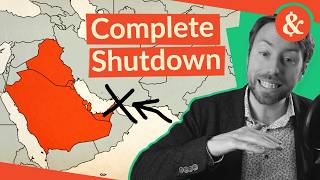 The Gulf economies are in BIG troubleMoney & MacroA Hormuz blockade could paralyze 62% of Qatar’s economy, yet Gulf wealth funds may sustain most states for years.
 If the strait opens, what happens to the economy?Money & MacroA two-week US-Iran ceasefire reopened Hormuz, easing oil prices while leaving food, currency and peace risks unresolved.
Related analyses
 Who will pay for 100 million boomer pensions?Money & MacroAging threatens pensions worldwide: Chile’s early withdrawals crashed stocks and fueled inflation, while funded systems may not escape the demographic squeeze.
 Why do 90% of economists oppose rent control?Money & MacroA review of 92 studies argues rent caps lower rents for current tenants but shrink rental supply, while Auckland’s rezoning helped stabilize rents.
 How Vienna solved the housing crisisMoney & MacroVienna keeps two-bedroom rents near €600–€800 by combining public housing, rent controls, and steady construction.
 Why do right-wing populists keep coming back?Money & MacroRight-wing populism survives defeats because inequality, cultural disconnects, and social media keep fueling support.
 What happens when you stop taxing billionaires?Money & MacroSwedish and Danish evidence suggests a 2% UK billionaire wealth tax could raise far less than £7.8 billion after avoidance and business losses.