The Gulf economies are in BIG trouble
Money & Macro · 2026-04-03 · 26 分鐘
https://www.youtube.com/watch?v=01V3IEn2MsY影片總結
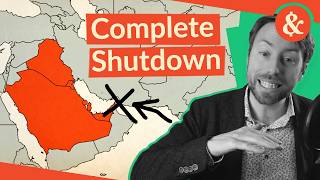
A Hormuz blockade could paralyze 62% of Qatar’s economy, yet Gulf states have years of financial buffers to endure a prolonged war.
The video assesses how war and a Strait of Hormuz blockade threaten Gulf economies built on oil, aviation, tourism and trade. Qatar is most exposed: with airspace and shipping disrupted, an estimated 62% of its economy is paralyzed; if the war ends in late April, Goldman Sachs forecasts a 14% contraction in 2026, matching Kuwait, versus 5% for the UAE and 3% for Saudi Arabia. Food and medicine imports are costlier and rerouted, but reserves and price controls have limited consumer-price shocks. In a prolonged conflict, export revenues could plunge, yet sovereign wealth funds and central-bank reserves offer substantial staying power: Kuwait could last about 10 years, Qatar eight, the UAE seven and a half, Iraq nearly two, while Bahrain has roughly seven months. The gravest threat is water: desalination supplies 99% of Qatar’s drinking water, and attacks could force evacuations. Even so, the Gulf’s financial buffers make total economic collapse less likely than a deep recession and lasting damage to Dubai’s safe-haven image and Saudi megaprojects.
章節
- 0:00Introduction: Hormuz Blockade Puts at Least 62% of Qatar’s Economy at Risk
- 4:00Scenario 1: Bahrain Faces 41% Disruption, While Iraq Diverts Oil Through Turkey
- 7:00Scenario 2: Qatar and Kuwait Could Shrink 14% as Hormuz Export Revenues Come Under Threat
- 14:00Scenario 3, Part 1: Wealth Buffers Could Keep Kuwait Going for Ten Years, but Bahrain Only Seven Months
- 20:29Scenario 3, Part 2: Desalination Attacks Could Force Evacuations as Gulf Resilience Faces Its Test
這是 Tier 1 公開摘要
每章重點、段落總結、心智圖由分享者控制是否公開。想看完整分析?自己提交一支。
同頻道的其他分析
 Economist reacts to podcast guests bashing economic scienceMoney & MacroJoeri argues economics is real social science, while debating Gary’s forecasts, Michael Saylor’s model critique, and Steve Keen’s education warning.
 Why Gen-Z cannot find a job anymoreMoney & MacroAI is squeezing entry-level hiring, while Trump’s tariffs and the end of COVID stimulus deepen the jobs slowdown.
 Why China's mineral monopoly can still be brokenMoney & MacroChina controls about 95% of rare-earth refining and magnet production, prompting a five-step plan for Western supply-chain independence.
 How scientists radically reduced US gun violence (no gun ban)Money & MacroPhiladelphia lot cleanups cut gun violence nearly 30%, while Chicago’s Becoming a Man program reduced violent arrests 45–50%.
 The 5 megatrends that will dominate 2026Money & MacroJuri forecasts China’s industrial rise, debt constraints, an AI bubble surviving 2026, and a 25% chance of a Taiwan blockade.
相關主題的分析
 How bad will the energy crisis get?Money & MacroYuri sees an 80% chance of a six-month Hormuz crisis, with oil reaching $150–$200 per barrel.
 If the strait opens, what happens to the economy?Money & MacroA two-week US-Iran ceasefire reopened the Strait of Hormuz, but energy prices remain high and Israel could derail peace talks.
 The PetroDollar is a myth. The Iran war confirmed it.Money & MacroThe 1974 US-Saudi deal prioritized stable oil prices, not dollar-only sales; Gulf petrodollars remain too small to underpin dollar dominance.
 EP151 - NVIDIA 的 CUDA 護城河消失中,但老黃早已想到下一步?AI 輔助的個人化 mRNA 癌症療法來了!科技浪黃仁勳要把 NVIDIA AI Factory 變成投資資產,莫德納個人化 mRNA 療法試驗達標,癌症復發與死亡風險降 49%。
 How to lose $35 Billion Dollars Betting on AIColdFusionLeopold Aschenbrenner’s AI fund fell from $45 billion to $10 billion after 400% leverage magnified a two-sided bet gone wrong.