Why are economists not more worried about inequality?

Money & Macro · 2026-04-02 · 23 min
https://www.youtube.com/watch?v=6uXaeZgxHRwVideo summary
Inequality stopped rising across most major economies, while evidence linking it to growth, crime, mobility, and democracy remains weak.
The video tests claims that rising inequality damages economic growth, increases crime and despair, blocks social mobility, and lets the wealthy capture democracy. Drawing on cross-country data and research by Gabriel Zucman and Lane Kenworthy, it argues that inequality rose sharply from 1980 to 2010 but has since largely stopped rising outside the US top 0.1%. Comparisons find no strong link with growth, murder rates, life expectancy, happiness, or social mobility; wealth inequality measures also show no clear relationship with poor outcomes. The presenter acknowledges that money influences US politics, but notes stable effective tax rates, progressive California policies, and weakening unions in more equal countries complicate the case that inequality alone drives political outcomes. Responding to critics, he stresses that inequality remains worse than 40 years ago and that housing costs, energy shocks, aging populations, and slower growth also strain households. Taxing Elon Musk’s entire fortune would fund US military spending for only about one year. The conclusion: inequality matters, but other crises are rising higher on his list of concerns.
Chapters
- 0:00The debate on inequality: four alleged harms and the evidence-first approach
- 2:38Economic and social effects: inequality plateaued and growth and murder trends defied expectations
- 4:27Health and happiness outcomes: weak cross-country links to inequality
- 5:38Social mobility and education: test-score gaps widened, but US mobility stayed stable
- 7:19Democracy and political power: California policies and stable top tax rates complicate the rigging claim
- 11:00Addressing audience feedback: research-bias accusations and Bellroy sponsorship disclosure
- 13:30Sponsor message
- 14:55Revisiting methodology: wealth measures, poorest-decile growth, and weak democracy correlations
- 18:56Conclusion on the evidence: inequality is one factor among housing, energy, and demographic pressures
This is a Tier 1 public summary
Whether the chapter key points, section summaries and mind map are public is up to the person who shared it. Want the full analysis?Submit one yourself.
More from this channel
 Economist reacts to podcast guests bashing economic scienceMoney & MacroJoeri argues economics is real social science, while debating Gary’s forecasts, Michael Saylor’s model critique, and Steve Keen’s education warning.
 Why Gen-Z cannot find a job anymoreMoney & MacroAI is squeezing entry-level hiring, while Trump’s tariffs and the end of COVID stimulus deepen the jobs slowdown.
 Why China's mineral monopoly can still be brokenMoney & MacroChina controls about 95% of rare-earth refining and magnet production, prompting a five-step plan for Western supply-chain independence.
 How scientists radically reduced US gun violence (no gun ban)Money & MacroPhiladelphia lot cleanups cut gun violence nearly 30%, while Chicago’s Becoming a Man program reduced violent arrests 45–50%.
 The 5 megatrends that will dominate 2026Money & MacroJuri forecasts China’s industrial rise, debt constraints, an AI bubble surviving 2026, and a 25% chance of a Taiwan blockade.
Related analyses
 【年度总结】一口气了解过去一年的全球经济|关税战新格局小Lin说特朗普關稅重塑貿易,印度成長 6.6% 領跑;美國押注 AI,日本通膨與中國內需成 2026 年變數。
 To Regulate AI Effectively, Focus on How It’s Useda16z Deep DivesMartin Casado argues AI laws should target harmful uses, while regulatory uncertainty pushes US startups toward Chinese open-source models.
 Are immigrants actually making Europe far less safe?Money & MacroStudies find migration has not significantly raised Europe’s overall crime rates, though legal work access and integration remain crucial.
 Are Tariffs Fueling the AI Race? | Deep Dives with a16za16z Deep DivesJacob Helberg says the AI race depends on superior models, global adoption, secure supply chains, and rebuilding U.S. manufacturing.
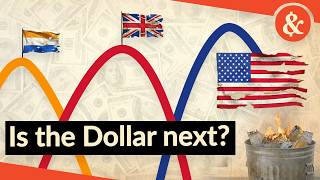 Is the Dollar finally on the way out?Money & MacroThe Dutch guilder and British pound lost reserve status, but the dollar could recover if Trump restores foreign confidence.