Paul Graham On Startups, Ambition, and Great Founders
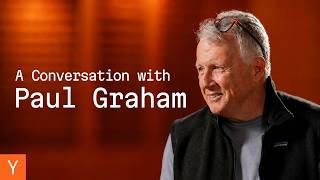
Y Combinator · 2026-09-03 · 21 min
https://www.youtube.com/watch?v=5bxp78i96S8Video summary
Paul Graham says formidable founders beat fear, ship fast, and turn ambitious ideas into trillion-dollar companies.
At YC’s original Mountain View office, Paul Graham reflects on 21 years of Y Combinator and why startups are becoming more ambitious. He cites OpenAI as an example of a “new Google,” arguing that paradigm shifts—not head-on competition—create giant companies. He says founders are driven day to day less by billionaire dreams than by fear of failure, disasters, and looking foolish; the truly formidable get what they want. Graham also explains that AI arrived in reverse: instead of progressing from simple, reliable systems to human-level intelligence, early ChatGPT appeared broadly human but frequently wrong. Despite AI tools, the key startup metric remains shipping speed, while GPU and token bills can reach tens of thousands of dollars per day. YC, he says, began as an angel firm and accidentally discovered the batch model, which still works because founders gain colleagues, feedback, and early customers.
Chapters
- 0:0021 Years of YC: 47th Batch and the Same Startup Fundamentals
- 1:07Why Today’s Startups Are More Ambitious: ICBM Cargo and Cancer Research
- 4:09Frighteningly Ambitious Ideas: OpenAI as a New Google
- 5:13What Actually Motivates Founders: Fear of Failure Beyond Billionaire Wealth
- 9:28What Makes a Founder Formidable: Getting What They Want with Limited Capital
- 12:54What Surprised PG About AI: Human-Like Flaws, Jagged AGI, and GPU Bills
- 17:58How YC Started and What Hasn’t Changed: From Summer Jobs to Formidable Founders
This is a Tier 1 public summary
Whether the chapter key points, section summaries and mind map are public is up to the person who shared it. Want the full analysis?Submit one yourself.
More from this channel
 Jeff Dean: The 1% Rule for Building in AIY CombinatorJeff Dean links Google Search, TPUs, Gemini agents, and founder strategy to 1,000x energy gaps and 0%-success niches.
 Patrick Collison: Is AI Breaking the Lean Startup Playbook?Y CombinatorPatrick Collison says Stripe took two years to launch, while Stripe data shows AI-era startups nearly doubled year over year.
 Waymo Co-CEO Dmitri Dolgov: The Demo Is Only 1% Of The WorkY CombinatorWaymo’s demo took 18 months, its product 15 years, now reaching 17× human safety across 220 million autonomous miles.
 Garry Tan: Own Your IntelligenceY CombinatorGarry Tan argues personal AGI, G Brain, and Markdown skills let one founder achieve 400x leverage while owning their intelligence.
 Max Hodak: Average Is Not Good EnoughY CombinatorMax Hodak explains how Science’s Helix infrastructure, hiring system, and retinal implant work turn speed into startup advantage.
Related analyses
 2026/8/21(五)巨頭搶錢 誰來接美債?AI是革命or下一場債務危機?【早晨財經速解讀】游庭皓的財經皓角美債突破40兆美元、殖利率反彈,AI民調與中國模型市占揭示新博弈
 EP336. 前沿模型該減速嗎、Anthropic 威脅報告、為什麼要一直聊模型 | M觀點M觀點Anthropic倡議前沿AI控速,Kimi疑將解放軍影像轉送Claude,AI硬體需求反而不減
 To Regulate AI Effectively, Focus on How It’s Useda16z Deep DivesMartin Casado argues AI laws should target illegal use, while US regulatory uncertainty pushes startups toward Chinese open-source models.
 Why AI Agents Need Context | Deep Dives with a16za16z Deep DivesFivetran’s George Fraser says AI agents need centralized data, while SAP API lockouts and the SaaS apocalypse threat remain overblown.
 How AI Will Rewire Consumer Internet | Deep Dives with a16za16z Deep DivesJosh Elman predicts consumer AI will surpass productivity, with Siri, ChatGPT, Robinhood, and TikTok illustrating retention-driven growth.