Is the Dollar finally on the way out?
Money & Macro · 2026-03-19 · 28 min
https://www.youtube.com/watch?v=bufMa2OscokVideo summary
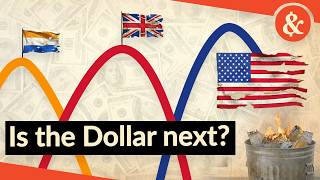
The Dutch guilder and British pound lost reserve status, but the dollar could recover if Trump restores foreign confidence.
Tracing 400 years of currency history, the video shows how the Dutch guilder’s reserve status helped the Netherlands borrow cheaply and survive invasion, but easy credit, financial overreach and the rise of Britain eventually undermined it. Britain inherited that advantage, borrowed heavily to fight Napoleon and later Germany, and retained influence even after the dollar overtook the pound. The dollar’s 1971 break from gold did not end its dominance: US spending supplies dollars worldwide, while the country’s markets, rule of law and role as an export destination sustain demand. But freezing foreign reserves, Trump’s tariffs and talk of taxing overseas holdings have shaken confidence; markets showed early signs of money flowing out during a crisis. The dollar has no clear rival yet, though China could strengthen its position. Losing reserve status would not mean instant collapse, but could weaken America’s borrowing and military power and bring prolonged stagnation. A recovery remains possible if Trump and his successors rebuild trust.
Chapters
- 0:00Introduction: The dollar hits a four-year low as the video compares it with the guilder and pound
- 1:23Dutch Guilder: Amsterdam’s Bank, the Rampjaar, and the loss of reserve-currency privilege
- 9:01British Pound: Napoleon-era borrowing and the 1913 Federal Reserve created a dollar rival
- 13:44British Pound: Sterling-area reserves prolonged its role after Bretton Woods
- 18:46US Dollar: The 1944 Bretton Woods order gave way to a fiat, spending-led system
- 22:00US Dollar: Biden’s reserve freezes and Trump’s tariff threats test foreign trust
This is a Tier 1 public summary
Whether the chapter key points, section summaries and mind map are public is up to the person who shared it. Want the full analysis?Submit one yourself.
More from this channel
 Economist reacts to podcast guests bashing economic scienceMoney & MacroJoeri argues economics is real social science, while debating Gary’s forecasts, Michael Saylor’s model critique, and Steve Keen’s education warning.
 Why Gen-Z cannot find a job anymoreMoney & MacroAI is squeezing entry-level hiring, while Trump’s tariffs and the end of COVID stimulus deepen the jobs slowdown.
 Why China's mineral monopoly can still be brokenMoney & MacroChina controls about 95% of rare-earth refining and magnet production, prompting a five-step plan for Western supply-chain independence.
 How scientists radically reduced US gun violence (no gun ban)Money & MacroPhiladelphia lot cleanups cut gun violence nearly 30%, while Chicago’s Becoming a Man program reduced violent arrests 45–50%.
 The 5 megatrends that will dominate 2026Money & MacroJuri forecasts China’s industrial rise, debt constraints, an AI bubble surviving 2026, and a 25% chance of a Taiwan blockade.
Related analyses
 JD Vance on AI, Entitlement Fraud, Iran War, Israel, H-1B Abuse & the MidtermsAll-In PodcastJD Vance touts $250 billion in fraud savings, defends the Iran war, and urges voters to back Republicans in the midterms.
 【年度总结】一口气了解过去一年的全球经济|关税战新格局小Lin说特朗普關稅重塑貿易,印度成長 6.6% 領跑;美國押注 AI,日本通膨與中國內需成 2026 年變數。
 Who will pay for 100 million boomer pensions?Money & MacroBoomer retirements threaten pensions as worker ratios fall, while Chile’s 2020 withdrawals triggered a stock crash and inflation.
 How long can the US keep borrowing so much?Money & MacroU.S. interest payments now exceed military spending, and projected costs could overtake Medicare by 2029.
 To Regulate AI Effectively, Focus on How It’s Useda16z Deep DivesMartin Casado argues AI laws should target harmful uses, while regulatory uncertainty pushes US startups toward Chinese open-source models.