The Science & Treatment of Bipolar Disorder | Huberman Lab Essentials
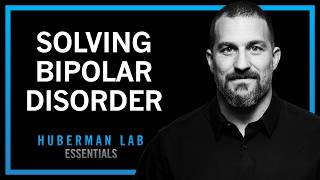
Andrew Huberman · 2026-07-16 · 31 分鐘
https://www.youtube.com/watch?v=UTB5gAkjevk影片總結
Andrew Huberman explains bipolar I and II, lithium’s discovery, and why medication, therapy, and clinical monitoring matter.
Andrew Huberman describes bipolar disorder as maladaptive shifts in mood, energy, and perception, noting a suicide risk 20–30 times higher than average. He distinguishes bipolar I, with mania lasting at least seven days, from bipolar II, involving hypomania and often depressive episodes, and outlines signs such as little or no sleep, pressured speech, impulsivity, and grandiosity. He recounts Australian psychiatrist John Cade’s experiments with guinea pigs and urine that led to lithium’s use for mania; lithium can help but requires close blood-level monitoring because of toxicity. Huberman discusses possible neuroprotective effects, cognitive behavioral and social-rhythm therapies, and stresses that talk therapy or supplements should not replace psychiatric care. He cites a small study in which 9.6 grams of fish oil daily for four months reduced bipolar depression symptoms, then notes research linking mood disorders with creative professions, including poets, while emphasizing correlation is not causation.
章節
- 0:00Bipolar Disorder: Maladaptive Shifts and 20–30 Times Greater Suicide Risk
- 1:09Bipolar I: Mania Lasting at Least Seven Days and Its Diagnostic Symptoms
- 5:00Bipolar II: Four-Day Hypomania and Varied Mood-Cycling Patterns
- 7:30Lithium’s Discovery: John Cade’s Uric-Acid Experiments After World War II
- 11:03Lithium Urate Experiments: Guinea-Pig Controls Revealed Lithium’s Calming Effect
- 13:20Lithium Salts Paper: 1949 Publication and Close Blood Monitoring
- 14:30How Lithium May Work: Brain Inflammation and Excitotoxicity Protection
- 15:29Bipolar Disorder: Declining Interoception and Lithium’s Possible Circuit Protection
- 18:10Bipolar Therapy: CBT and Interpersonal & Social Rhythm Treatment
- 20:00ECT for Treatment-Resistant Depression and the Need for Psychiatric Care
- 22:29Lifestyle Support: Sleep, Exercise, Nutrition, Social Contact, and Sunlight
- 23:30Inositol and Omega-3s: A 30-Person Fish-Oil Study at 9.6 g Daily
- 25:30Full Bipolar Treatment: Medication, Therapy, Lifestyle, and Supplements
- 26:40Creativity and Mood Disorders: Up to 90% of Eminent Poets and 30% of Actors
- 30:00Bipolar Disorder Recap: Key Symptoms, Lithium, and Professional Care
這是 Tier 1 公開摘要
每章重點、段落總結、心智圖由分享者控制是否公開。想看完整分析?自己提交一支。
同頻道的其他分析
 Essentials: Using Meditation to Focus, View Consciousness & Expand Your Mind | Dr. Sam HarrisAndrew HubermanSam Harris explains how meditation reveals the self as an illusion and helps attention rest in the present.
 Your Top Health Questions AnsweredAndrew HubermanAndrew Huberman explains late-night Alpha-GPC workouts, morning daylight, fertility, memory training, and finding your passion.
 Essentials: How to Become Resilient, Forge Your Identity & Lead Others | Jocko WillinkAndrew HubermanJocko Willink says discipline beats motivation, exercise builds energy, and taking action helps overcome adversity.
 Control Your Brain Chemistry for Focus, Motivation & Well-Being | Huberman Lab EssentialsAndrew HubermanAndrew Huberman explains how dopamine, adrenaline, serotonin, and acetylcholine shape daily focus, motivation, energy, and mood.
 Essentials: How to Optimize Female Hormone Health for Vitality & Longevity | Dr. Sara GottfriedAndrew HubermanDr. Sara Gottfried links women’s hormone biomarkers to PCOS, perimenopause, brain metabolism, and heart risk, urging a coronary calcium scan by age 45.
相關主題的分析
 Essentials: How to Access Your Creativity | Rick RubinAndrew HubermanRick Rubin tells Andrew Huberman creativity begins with attention, trusting your taste, and knowing when to finish.
 Essentials: Use Sleep to Enhance Learning, Memory & Emotional State | Dr. Gina PoeAndrew HubermanDr. Gina Poe explains how 90-minute sleep cycles support memory, growth hormone release, brain cleanup, creativity, and emotional processing.
 Essentials: Diet & Nutrition for Mental Health | Dr. Chris PalmerAndrew HubermanDr. Chris Palmer says ketogenic diets may aid mental health, citing a patient whose schizophrenia symptoms eased and who lost 160 pounds.
 Essentials: Genes & the Inheritance of Memories Across Generations | Dr. Oded RechaviAndrew HubermanDr. Oded Rechavi explains how small RNAs let C. elegans pass viral resistance and food-finding behavior across generations.
 Essentials: How to Assess & Improve All Aspects of Your Fitness | Dr. Andy GalpinAndrew HubermanDr. Andy Galpin lays out nine fitness components, with benchmarks including 40 kg grip strength, 25 push-ups, and VO2 max targets.