Paul Graham On Startups, Ambition, and Great Founders
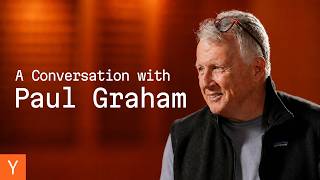
Y Combinator · 2026-09-03 · 21 min
https://www.youtube.com/watch?v=5bxp78i96S8Video summary
Paul Graham says formidable founders drive trillion-dollar companies, while YC’s core startup lessons remain unchanged after 21 years.
At YC’s original Mountain View office, Paul Graham reflects on the accelerator’s 21 years and argues that today’s startups are tackling more ambitious problems, from cancer research to intercontinental cargo rockets. He says founders need ambition because building a company is grueling, but day-to-day they are usually driven less by future wealth than by fear of failure and the urgent problems in front of them. The strongest founders are “formidable”: people who get what they want. Graham also explains that OpenAI made a new kind of Google possible by changing how people access information, and says AI’s surprising path began with human-like, plausible errors rather than simpler, reliable intelligence. AI has not changed the fundamentals: startups still need to ship quickly, though GPU and token bills can now reach tens of thousands of dollars a day. He recounts how YC began as an angel-investing experiment that became a summer startup batch, and says its model has changed little as it grew.
Chapters
- 0:0021 Years of YC: The 47th Batch and Startup Fundamentals
- 1:07Why Today’s Startups Are More Ambitious: Cancer Research and Ballistic Cargo
- 4:09Frighteningly Ambitious Ideas: OpenAI Recasts the Search for a New Google
- 5:13What Actually Motivates Founders: Fear of Failure, Innate Ambition, and the Hard Reality of YC
- 9:28What Makes a Founder Formidable: Getting Results, Lean Budgets, and Star Cloud’s Booked Launch
- 12:54What Surprised PG About AI: ChatGPT’s Humanlike Errors, Uneven AGI, and Token Bills
- 17:58How YC Started and What Hasn’t Changed: Summer Batches, Small Groups, and Formidable Founders
What the full analysis includes
7 chapters · 36 key points · 7 section summaries · mind map
Preview of the first chapter · 21 Years of YC: The 47th Batch and Startup Fundamentals
The remaining 33 key points, section summaries and mind map are in the full analysis. Analyze this video to see everything →
This is a Tier 1 public summary
Whether the chapter key points, section summaries and mind map are public is up to the person who shared it. Want the full analysis?Submit one yourself.
More from this channel
 What Happens When Everyone Can Build SoftwareY CombinatorSupabase CEO Paul Copplestone says AI builders could drive 1.2 billion personal databases monthly, as Supabase surpasses 13 million users.
 The Case For Data Centers In SpaceY CombinatorStarcloud CEO Philip Johnston says orbital data centers could add 20 GW of compute, with 88,000 satellites planned.
 How To Design In The Agent EraY CombinatorPaper founder Stephen Haney says HTML/CSS-based design and human judgment can help teams ship faster without AI-generated sameness.
 Patrick Collison: Is AI Breaking the Lean Startup Playbook?Y CombinatorStripe CEO Patrick Collison says new businesses on Stripe are up nearly 2x year over year, making this a remarkable time to start.
 Why Robotics Still Isn't Solved - But Could Be Soon | YC Paper ClubY CombinatorYC Robotics Club researchers tackle robot memory, action reasoning, and dexterous tool use as startups seek practical deployment.
Related analyses
 AI Companies Are Setting Money on Fire | OpenAI's Pre-Bailout Bailout PlanGamers NexusOpenAI lost $38.5 billion in 2025 while pursuing a $280 billion revenue target and reportedly offering the U.S. government a 5% stake.
 There Are No Non-Clowns in the Clown CarGamers NexusNvidia bankrolls AI buyers as Samsung, SK Hynix, and Micron forecast memory shortages through 2028 and data center backlash grows.
 Inside the early days of the AI revolution | The VergecastThe VergeKevin Roose says Google shelved a ChatGPT-like chatbot in 2020, while OpenAI launched an imperfect product that reshaped AI.
 AI Safety Fact vs. Fiction | YC Paper ClubY CombinatorYC’s AI safety panel challenges “10% doom” claims and shows how Lean proofs and stress testing can improve software security.
 AI Cyber Panic, Ken Griffin’s Bubble Warning, The Fall of France?All-In PodcastKen Griffin questioned AI’s payoff as Nikesh Arora detailed PHP cyber risks and All-In debated France’s riots and debt crisis.