Paul Graham On Startups, Ambition, and Great Founders
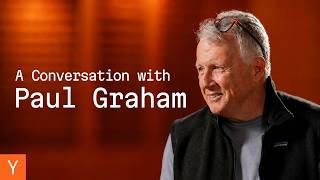
Y Combinator · 2026-09-03 · 21 min
https://www.youtube.com/watch?v=5bxp78i96S8Video summary
Paul Graham says formidable founders—not a specific idea—will build the next trillion-dollar company, while AI changes little about startups.
At YC’s 21st year and 47th batch, Paul Graham says startups still face the same core challenges, but today’s founders are pursuing more ambitious ideas, from cancer research to intercontinental cargo rockets. He describes ambition as what carries founders through grueling obstacles, while day-to-day work is driven less by dreams of wealth than by fear of failure. A formidable founder, he says, is someone who gets what they want. Graham recalls OpenAI changing how he searches for information and says AI arrived as a flawed, human-like generalist rather than a perfect system that gradually gained abilities. He argues startups can still begin with little money, shipping speed remains a key predictor of success, and AI can bring bills of tens of thousands of dollars a day. YC began as an angel firm and summer-job alternative; its batch model and core startup challenges have changed little. The next trillion-dollar company, he concludes, will come from formidable founders.
Chapters
- 0:0021 Years of YC: Paul Graham Gives His 47th Batch Talk
- 1:07Why Today’s Startups Are More Ambitious: Cancer Research and Intercontinental Cargo
- 4:09Frighteningly Ambitious Ideas: OpenAI Replaces Graham’s Google Searches
- 5:13What Actually Motivates Founders: Fear of Failure, Not Billionaire Dreams
- 9:28What Makes a Founder Formidable: Getting Results and Building on Limited Capital
- 12:54What Surprised PG About AI: Human-Like Errors, a Blurry AGI Threshold, and Huge Token Bills
- 17:58How YC Started and What Hasn’t Changed: Summer Batches and the Founders Behind the Next Giant
This is a Tier 1 public summary
Whether the chapter key points, section summaries and mind map are public is up to the person who shared it. Want the full analysis?Submit one yourself.
More from this channel
 Patrick Collison: Is AI Breaking the Lean Startup Playbook?Y CombinatorPatrick Collison says Stripe’s new-business starts are nearly 2x year over year, making this a better time than ever to found a company.
 The Case For Data Centers In SpaceY CombinatorStarcloud CEO Philip Johnston explains how an H100 reached orbit and why 88,000 satellites could host space-based AI data centers.
 Waymo Co-CEO Dmitri Dolgov: The Demo Is Only 1% Of The WorkY CombinatorWaymo co-CEO Dmitri Dolgov says the demo took 18 months, but building a safe robotaxi product took 15 years.
 Garry Tan: Own Your IntelligenceY CombinatorGarry Tan says personal AGI can make one founder 400x more productive—and argues your AI skills should stay in your own repo.
 Max Hodak: Average Is Not Good EnoughY CombinatorScience CEO Max Hodak says Helix and faster iteration drive startup speed, while one retinal implant patient read a 300-page novel.
Related analyses
 The 5 megatrends that will dominate 2026Money & MacroJuri forecasts China’s industrial rise, debt constraints, an AI bubble surviving 2026, and a 25% chance of a Taiwan blockade.
 The RAM Crisis Keeps Getting WorseColdFusionAI data centers are tightening RAM supplies, driving up device costs as Samsung, SK Hynix, and Micron prioritize enterprise buyers.
 矽谷科技公司哪家薪水最慷慨?New Grad沒身份對找工作的影響?讀資工系還有未來嗎?OpenAI、Google、LinkedIn、Salesforce第一手分享哈佛姐夢遊矽谷 AliceInSiliconWonderlandxAI 应届生基础薪资约 35 万美元,求职者谈H-1B、AI 冲击与 1500 份简历的挫折。
 AI巨头们之间的资本混战,到底是个什么情况?小Lin说微軟持有 OpenAI 約 27% 股權,亞馬遜與 Google 轉向雙押 Anthropic,AI 投資也綁定天價算力訂單。
 連續押中 Facebook、Uber 成功出場,與矽谷大神聊聊選公司的眼光、創業與 AI feat. Jarsy 創辦人秦漢 | S2E64矽谷輕鬆談 Just Kidding Tech秦漢從 Facebook、Uber 談到 Jarsy,主張先服務用戶、重視合規,也分享 AI 如何改變工程工作。