Blake Scholl: Why Plane Speed Stalled, Supersonic Commercial Flight, & Revolutionizing the Engine
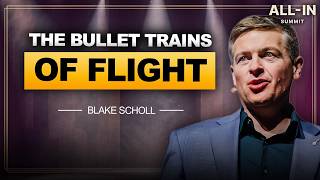
All-In Podcast · 2026-09-22 · 18 min
https://www.youtube.com/watch?v=Gnb-CfNPcPEVideo summary
Boom Supersonic’s Blake Scholl says XB-1 ended the U.S. supersonic ban and its engine could add 10 gigawatts to the grid.
Boom Supersonic CEO Blake Scholl recounts building XB-1 with a team of about 50, then breaking the sound barrier in 2025 using “boomless cruise,” which redirects the sonic boom upward. He says the U.S. ban on supersonic flight ended by executive order on June 6, and the Supersonic Legalization Act passed the House unanimously. After ending its Rolls-Royce partnership, Boom chose to design and manufacture its own engines. The technology is also being adapted for data centers: Scholl says a trailer-based system can deliver 42 megawatts without water, with tens of gigawatts of customer demand and a goal to add more than 10 gigawatts to the grid over five years. For Overture, he estimates a three-hour round trip across the Atlantic at Mach 1.7, with a $3,500 break-even fare and a four-year target. He also describes congressional support and rapid White House action on supersonic rules.
Chapters
- 0:00Welcome Blake Scholl: Boom’s 50-person team builds XB1, the first privately developed supersonic jet
- 5:11Solving the sonic boom: Boomless Cruise and the June 6 end of the US ban
- 6:37The pivot to powering data centers: 42-megawatt engines and a 10-plus-gigawatt goal
- 10:38Jason joins: $3,500 transatlantic fares, tens of gigawatts of demand, and Boom’s vision for supersonic travel
This is a Tier 1 public summary
Whether the chapter key points, section summaries and mind map are public is up to the person who shared it. Want the full analysis?Submit one yourself.
More from this channel
 Elon Musk & Gwynne Shotwell on AI Risks and Peer Review, Starship, Terafab, SpaceX/Tesla MergerAll-In PodcastGwynne Shotwell and Elon Musk discuss Starship’s 2027 reusability goal and cross-company AI safety reviews.
 Satya Nadella on the AI Doomer Slowdown, Microsoft’s Master Plan & Who Wins AIAll-In PodcastSatya Nadella argues AI needs tighter agent monitoring, while Microsoft invests in Azure, MAI models, and an AI data center generating local benefits.
 JD Vance on AI, Entitlement Fraud, Iran War, Israel, H-1B Abuse & the MidtermsAll-In PodcastJD Vance touts $250 billion in fraud savings, defends the Iran war, and urges voters to back Republicans in the midterms.
 Meta's Dina Powell McCormick: The Case for Data Centers, Backlash, AI Job Boom & Meta’s FutureAll-In PodcastDina Powell McCormick says Meta’s Louisiana data center helped fund $50,000 teacher checks and backs new AI job training.
 Brad Gerstner: No AI Bubble, Semis Eat the Nasdaq & AI's Take Off ProblemAll-In PodcastBrad Gerstner says AI is no bubble, but labs must grow revenue to fund trillions in data-center spending.
Related analyses
 Why Building AI Data Centres Isn’t Working AnymoreColdFusionColdFusion reports nearly half of US data center projects delayed or canceled as $650 billion plans collide with power, water, and community opposition.
 Michael Kratsios: Inside the White House's AI StrategyY CombinatorMichael Kratsios backs open-source AI and one national rulebook, while proposing AI-powered labs and a 2028 quantum computing goal.
 Why Top Founders Are Racing Into AI Infrastructurea16za16z’s Machine Age Fund targets AI infrastructure as GPU supply is booked to 2028 and memory demand needs three years of capacity.
 Why AI Demand Is Outrunning Compute Supplya16zGavin Baker argues AI compute demand will outpace supply, with sub-one-year infrastructure paybacks and orbital data centers approaching.
 Why Gen-Z cannot find a job anymoreMoney & MacroAI is squeezing entry-level hiring, while Trump’s tariffs and the end of COVID stimulus deepen the jobs slowdown.